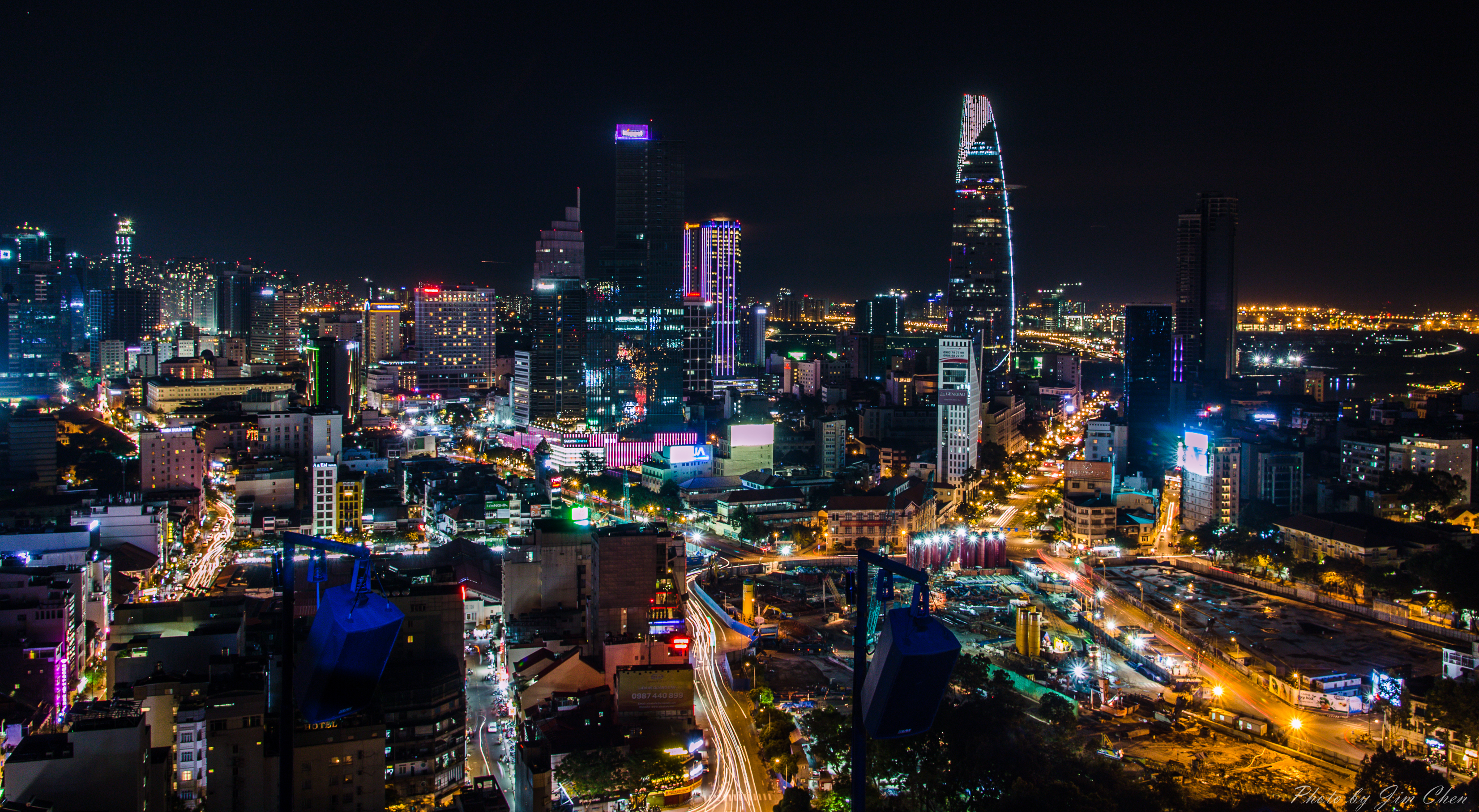
Vietnam est un pays d’Asie du sud sur le Mer de Chine méridionale et le Golfe de Thailande. Les pays frontaliers, ou les pays les plus à près de Vietnam, sont la Chine, le Laos, et le Cambodge.
Le pays est petit, mais la population est grande. 95.540.000 des gens habite en Vietnam, 7.782.000 habite en la capitale Hanoi. Pourtant, Hanoi n’est pas le plus grand ville, Ho Chi Minh Ville est avec une population 8.993.000. C’est quatre fois plus grand que le population de Paris!
Le langue officielle du pays est Vietnamien, mais il a été le français pendant le colonialisme français. Maintenant, moins que 1% de la population parle le francais.
Les choses à faire pendant votre visite
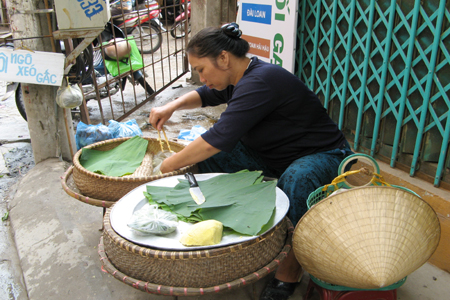
Vietnam a beaucoup des grandes villes intéressantes pour visiter et les belles lacs, plages, et montagnes pour expolorer. Il y a beaucoup des endroits cultural et historic aussi, comme les temples, pagodes, et musées d’art. Aussi, Vietnam est célèbre pour leur “cuisine de rue”, quand la nourriture n’est pas préparé dans un restaurant, mais les vendeurs la préparé à l’extérieur.
Bronzer sur les plages à Mui Ne
Mui Ne est une ville touristique sur la Mer de Chine méridionale. Il y a des jolies plages et beaucoup des hôtels a près de mer. C’est très populaire pour la planche à voile, faire une promenade en bateau, et autres activités d’eau.
Faire un randonnée dans les montagnes du nord du Vietnam
Le plus grand montagne en la région et en tout l’Indochine est Le mont Fansipan, avec un altitude 3.143 m. Le randonnee a besoin 6 ou 7 jours pour conquérir (finir). Après le randonnee, visiter Sa pa, où l’architecture dans la ville est influencé par la française.
Manger de délicieux cuisine de rue en Hanoï
Les plats, ou les nourritures, du Vietnam sont très unique et tu peux trouver souvent les meilleures vendus dans la rue. Beaucoup des endroits qui vendent de la cuisine de rue ont des chaises et des tables petites pour leur clients à manger à. En Hanoi, xoi, bun cha, et pho ga sont des plats plus populaire.
Alors, êtes-vous prêt à visiter le Vietnam?
Vous pouvez acheter votre billet d’avion pour Ho Chi Minh Ville ou Hanoi aujourd’hui!
White Sage (Salvia apiana) is included in numerous watch lists for fear of the plant becoming endangered in the wild
Walk into just about any New Age store and the signs of cultural appropriation will be all around you. Smudging sticks, faux eagle feathers, and abalone shells line the walls and shelves while the smell of sage lingers in the air. In some more extreme cases, including in places located here in the rather liberal Ann Arbor, stores will sell headdresses, moccasins, instruments, and art that are meant to resemble those created and used by Native Americans. Many New Age religions have created a new market for objects that have traditionally been used by Native Americans, seeking them out for their “aesthetic” and “inherent spirituality.”
White sage (Salvia apiana) is commonly used by numerous, but not all, Indigenous Peoples across North America for smudging ceremonies. Smudging is the burning of a medicinal or sacred plant (often including either white sage, cedar, or sweetgrass) and is often used to clear negative energies from a room or home. Sadly, it is also one of the latest articles of Native American culture to hit the headlines for being grossly appropriated.
Unsurprisingly, big-name stores such as Sephora, Anthropologie, and Walmart could not bear to pass up the opportunity to capitalize on a new “fad.” Just last year Sephora teamed up with Pinrose to market what they labeled as a “Starter Witch Kit” that included a smudge stick made from a bundle of white sage. After receiving harsh and much-deserved backlash, Sephora and Pinrose both issued apologies and the kits never made it to the shelves.
Screenshot/Sephora, Starter Witch Kit The infamous “Starter Witch Kit” that was to be sold at the popular beauty store Sephora
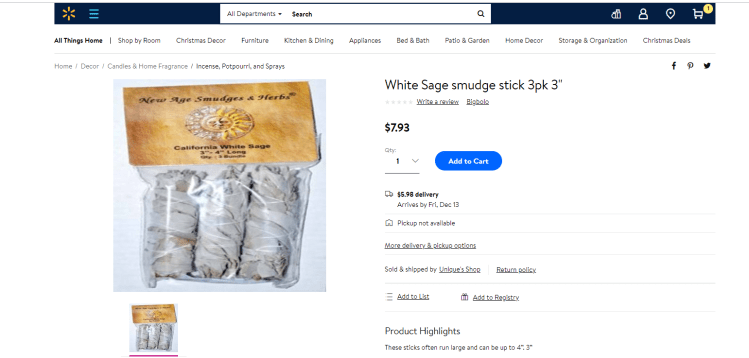
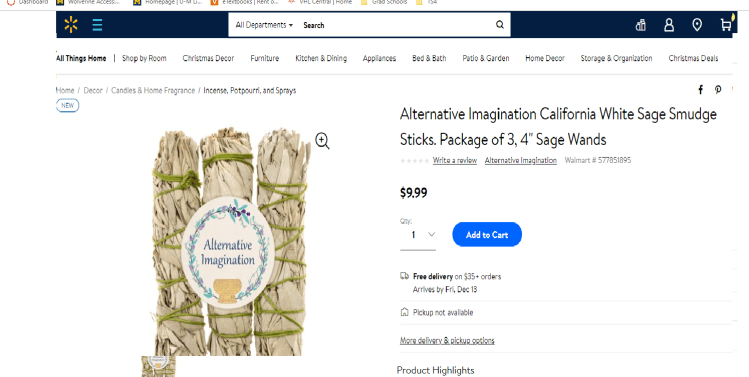
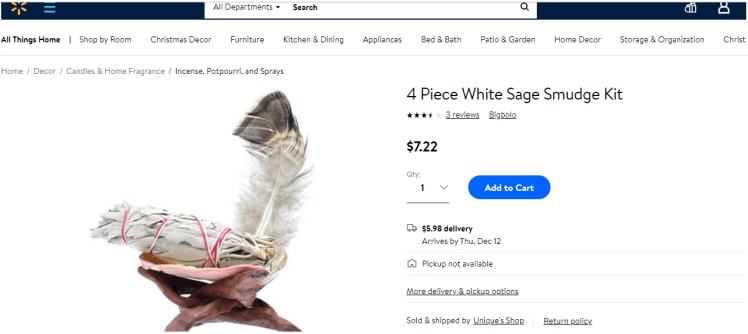
Around the same time, Anthropologie had released a “Cleaning Space Kit”, which was also ultimately discontinued. However, some companies haven’t taken the hint that capitalizing off of cultural appropriation isn’t cool. Just take a visit to Walmart’s website and there you’ll find them offering several different options for smudge sticks that are still available for purchase.
Screenshots/Walmart A few examples of smudge sticks that are currently available for purchase from Walmart
“These huge companies are profiting off our spirituality. That’s not how it should be, it hurts my heart quite a bit”
This quote comes from Amy Willier, co-owner of MoonStone Creation Native Art Gallery, in an interview she did for Huffpost about white sage. Willier, as well as manyothers who have spoken out against this issue, aren’t saying that no one should be able to sell white sage, but rather that companies and non-Indigenous peoples should not be able to profit off of their spirituality. Globally, Indigenous Peoples have dealt with similar issues in which companies and non-Indigenous spirituality-seekers have stolen culturally significant objects, ideas, livelihoods, and designs for their own gains and profit.
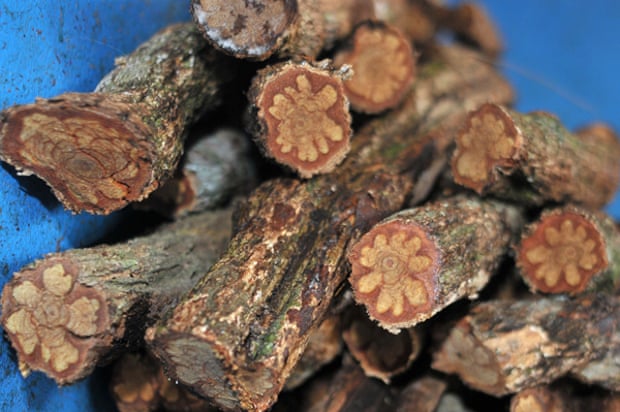
An example that comes to mind involves ayahuasca, a sacred medicinal beverage used by nearly 100 Indigenous groups throughout the upper Amazon. Unfortunately, the brew has become a victim to globalization, now appearing in dozens of countries outside of its native Amazonian habitat and is being used by non-Indigenous peoples with no regard for the sacredness of the drink or the rituals associated with it. Within the last year, a discussion has been raised over the ill effects the overuse of ayahuasca by non-Indigenous peoples has had on the plant’s numbers. Many people local to the Amazonian region claim that the plant is becoming increasingly difficult to find in the wild as the demand for it has increased both locally and abroad, however, there is very little, if any scientific research that has been done to prove this.
Photograph/Emilie Lescale, The Guardian Ayahuasca is made from a vine known as Banisteriopsis caapi.
Similarly, Indigenous peoples who regularly use white sage have called for companies and non-Indigenous folks to stop harvesting the wild plant despite it not being classified as endangered or even threatened by the United States government.
“The plant itself is not endangered in the US-stamped-on-a-list kind of way, though many online are saying that, but what is endangered is Native peoples’ ability to access and use wild white sage in the ways that they and their ancestors have done for thousands of years.”
In 2008, the Peruvian National Institute of Culture declared the knowledge and traditional uses of ayahuasca as intangible cultural heritage of the nation in attempts to preserve the brew from commodification, and now Brazil is trying to do the same. Why can something like this not be done in the United States in order to protect white sage?
Article 12 of the United Nations Declaration on the Rights of Indigenous Peoples (UNDRIP) states thus: “Indigenous peoples have the right to manifest, practice, develop and teach their spiritual and religious traditions, customs and ceremonies.”
Indigenous peoples have cited this article as grounds for protecting white sage, as the current harvesting and selling of the wild plant has made it difficult for some people to continue their traditional ceremonies that involve the plant. As an endorsee of UNDRIP, you would think that the U.S. would abide by this article and intervene with the shameless commodification of white sage which poses a threat to Native culture and rituals.
As a solution to this problem, the U.S. could ambitiously follow the footsteps of Peru and declare the traditional Indigenous uses of white sage as intangible cultural heritage as the plant is essential to the “practices, representations, expressions, knowledge and skills that communities and groups recognize as part of their cultural heritage.” By doing so, there would be an obligation to protect the wild plant from the harm of commodification, thus ensuring the continued use of it in sacred Indigenous rituals and ceremonies.
To read more on intangible cultural heritage and to better understand why white sage deserves protection under it, feel free to view this document published by UNESCO.




 Harvesting History